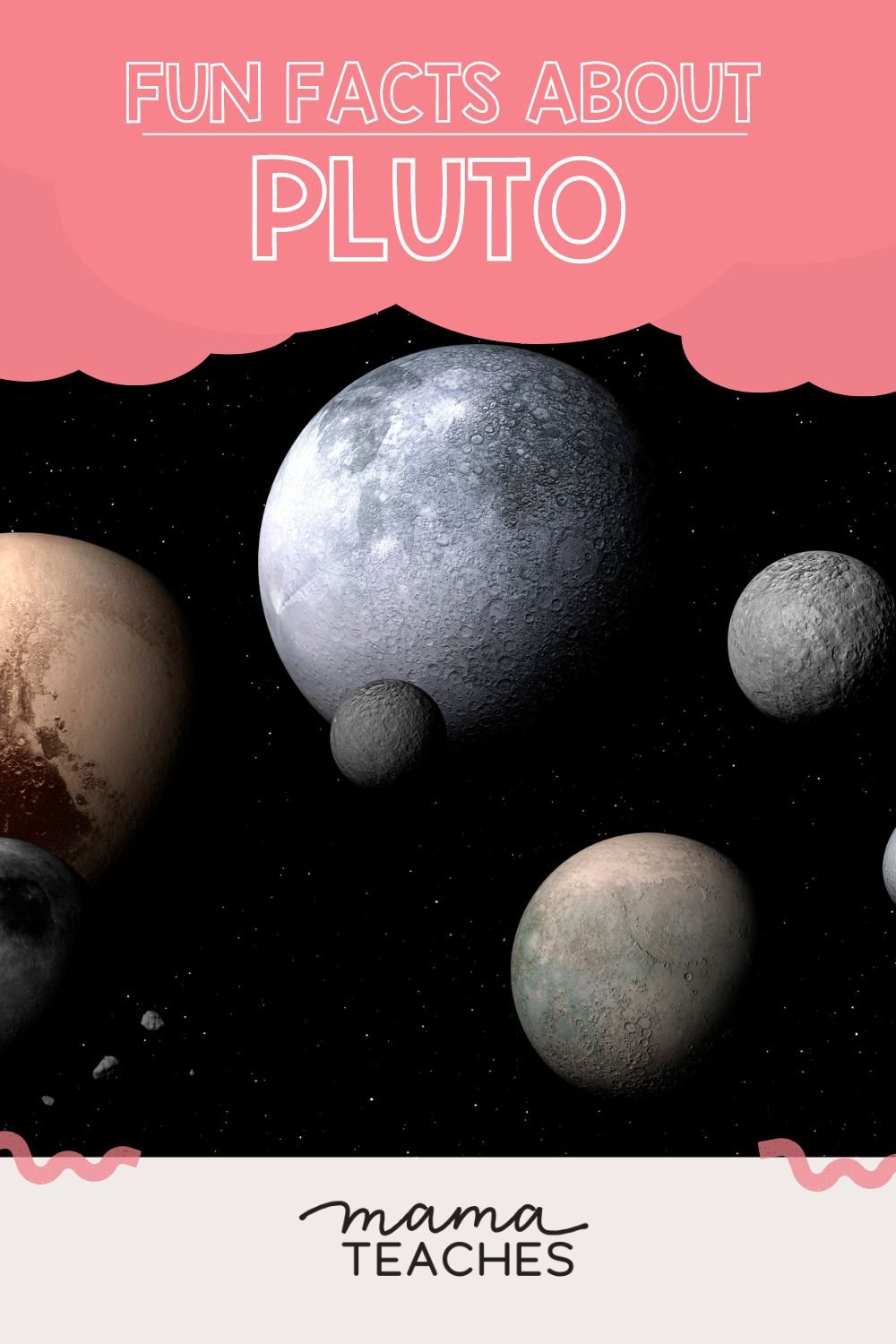
Beneath the distant, icy veil of our solar system, a small, controversial world has captivated scientists and stargazers for decades. We're talking, of course, about Pluto – a celestial body that has weathered scientific debate, embarked on an epic journey to planetary redefinition, and ultimately, revealed itself as a fascinating, dynamic dwarf planet. If you're ready to look past the headlines and delve into the surprising secrets of this cosmic underdog, join us for a deep dive into the Behind-the-Scenes Facts and Trivia about Pluto that make it one of the most compelling stories in our astronomical neighborhood.
At a Glance: Pluto's Quick Hits
Before we venture deep into the Kuiper Belt, here’s a snapshot of what makes Pluto so intriguing:
- Discovered by Chance: Spotted in 1930 by a young astronomer searching for a mysterious "Planet X."
- Named by a Kid: An 11-year-old girl gave it its famous underworld moniker.
- Not Just a "Rock": A surprisingly active world with an atmosphere, glaciers, mountains, and possibly a subsurface ocean.
- The Heart of the Matter: Home to a massive, iconic heart-shaped glacier named Tombaugh Regio.
- Five Moons: Its largest moon, Charon, is so big they're often called a "double dwarf planet" system.
- An Epic Voyage: Only one spacecraft, New Horizons, has ever visited, revealing its secrets in 2015.
- A Dwarf Planet with Status: Reclassified in 2006 due to its inability to clear its orbital path, it's now the largest known object in the Kuiper Belt by volume.
The Big Reveal: Pluto's Discovery & Its Planetary Identity Crisis
Pluto’s story began with a mystery. For years, astronomers had noticed subtle orbital anomalies of Neptune and Uranus that suggested the gravitational pull of an unseen ninth planet. This led Percival Lowell, a prominent astronomer, to initiate a dedicated search for "Planet X" at his Arizona observatory. Though Lowell died before its discovery, his quest bore fruit.
On February 18, 1930, a then 24-year-old Clyde Tombaugh, meticulously comparing photographic plates from the 13-inch Lawrence Lowell Telescope, spotted a tiny moving pinprick of light against a field of stars. This was it: the long-sought ninth planet.
What's in a Name? Everything.
Once discovered, the new planet needed a name. Suggestions poured in from around the world, but it was an 11-year-old English schoolgirl named Venetia Burney who made the winning proposal. Fascinated by classical mythology, she suggested "Pluto," after the Roman god of the underworld. Her grandfather passed the idea to an astronomer friend, who then forwarded it to the Lowell Observatory. The name stuck, perfectly reflecting the planet's distant, dark, and icy realm. Even its astronomical symbol, ♇, pays homage to Percival Lowell, incorporating his initials.
From Planet to Dwarf: The Great Reclassification of 2006
For 76 years, Pluto proudly held its title as the ninth planet. Then came 2006, and with it, a scientific storm. Astronomers had begun discovering other large, icy bodies in the distant solar system, including one named Eris, which turned out to be more massive than Pluto. This prompted the International Astronomical Union (IAU) to revisit the very definition of a "planet."
The new criteria stipulated that a celestial body must:
- Orbit the Sun.
- Be massive enough for its own gravity to make it spherical.
- Have "cleared its orbital path" of other debris.
While Pluto met the first two criteria, it failed the third. Residing within the vast Kuiper Belt, it shares its orbital neighborhood with countless other intriguing Kuiper Belt objects and hasn't gravitationally dominated its region. Thus, in a controversial decision, Pluto was reclassified as a "dwarf planet," officially designated 134340 Pluto. This designation places it among an exclusive club of five recognized dwarf planets, including Ceres, Haumea, Makemake, and Eris. Understanding what makes a dwarf planet distinct from a full-fledged planet boils down to this "clearing the neighborhood" rule, a concept that continues to spark debate among enthusiasts and scientists alike.
Where in the Cosmos is Pluto? Its Wild Ride Through the Kuiper Belt
Pluto isn't just "out there"; it's a prominent resident of the Kuiper Belt, a vast, doughnut-shaped region of icy bodies that extends far beyond Neptune. Imagine a second, much larger asteroid belt, but filled with primordial leftovers from the solar system's formation, mostly ice and rock. As a trans-Neptunian object, Pluto holds the impressive title of the largest known Kuiper Belt object by volume, even though Eris is slightly more massive.
A Ballet with the Sun: Pluto's Unique Orbit
Pluto's journey around the Sun is unlike any of the major planets.
- A Marathon Orbit: It takes a staggering 248 Earth years to complete just one orbit, traveling at an average speed of 10,623 miles per hour. This means that since its discovery in 1930, Pluto hasn't even completed half a single orbit around the Sun!
- The Tilted Path: Its orbit is dramatically tilted at 17 degrees to the ecliptic plane—the plane in which most other planets orbit. Only Mercury has a more tilted orbit.
- A Squashed Ellipse: Pluto's path is also far more elliptical (eccentricity ~0.25) than the nearly circular orbits of the major planets. This means its distance from the Sun varies wildly, from a relatively close 29.7 AU (perihelion) to a distant 49.3 AU (aphelion). Its last perihelion was in 1989.
- Neptune's Dance Partner: Despite its elliptical path, Pluto never collides with Neptune. They share a fascinating "3:2 orbital resonance," meaning Pluto completes two orbits for every three orbits of Neptune. This cosmic rhythm ensures they stay out of each other's way, even when Pluto's highly eccentric orbit occasionally brings it closer to the Sun than Neptune, as it did from 1979 to 1999.
To put its distance in perspective, light from the Sun, which takes about eight minutes to reach Earth, takes over five hours to reach Pluto. Imagine looking back at our Sun from Pluto – it would appear as little more than a tiny, bright star, illuminating Pluto's surface with only about 1/1,600 the brightness we experience on Earth.
Peeling Back the Layers: Pluto's Surprising Physical Traits
For decades, our understanding of Pluto was limited to faint telescopic blips. The New Horizons mission changed all that, revealing a small but incredibly complex world with features that defy its diminutive size.
A Small World, Big Personality
Pluto is undeniably small, with a diameter of approximately 2,376 kilometers (a mean radius of ~1,188 km). To put that into perspective, it's smaller than Earth's Moon, which measures about 3,474 kilometers across. While Eris might be more massive, Pluto is still the largest known Kuiper Belt object by volume.
- Mass and Density: Its mass is about 1.303 × 10^22 kg, and its density is 1.86 g/cm³, suggesting a composition of roughly two-thirds rock and one-third ice.
- Feather-Light Gravity: If you could stand on Pluto, you'd feel incredibly light. Its surface gravity is only about 6% of Earth's (0.62 m/s²). A 150-pound person on Earth would weigh a mere 9 pounds on Pluto!
- Extreme Cold: The average surface temperature hovers around a frigid 44 Kelvin (-380°F or -230°C). This is cold enough to freeze common atmospheric gases like nitrogen and methane solid.
Days, Nights, and Seasons in the Deep Freeze
Pluto's rotation and axial tilt give it some truly peculiar characteristics:
- A Long Day: One Pluto day lasts 6.387 Earth days, meaning if you could spend a week there, you'd only experience one "Pluto day."
- Sideways Rotation: Its axial tilt is approximately 57 degrees (or about 120 degrees if measured differently), causing it to rotate almost on its side. This extreme tilt means that, from certain points on its surface, the Sun would appear to rise in the west and set in the east, a retrograde rotation effect.
- Endless Seasons: Because of its long orbital period, one season on Pluto can last for over 20 Earth years! Imagine a winter that lasts for two decades.
Beneath the Frozen Veil: Pluto's Dynamic Atmosphere & Surface
Before New Horizons, many envisioned Pluto as a static, inert ball of ice. What we found was a world buzzing with surprising geological activity and a temporary, yet stunning, atmosphere.
A Breath of Nitrogen: Pluto's Fleeting Atmosphere
Pluto's atmosphere is a delicate, temporary affair. Primarily composed of nitrogen, with traces of methane and carbon monoxide, it acts like a cosmic blanket that ebbs and flows with Pluto's orbital journey.
- Freeze-Thaw Cycle: When Pluto is closer to the Sun (at perihelion), its surface ices warm slightly, causing them to vaporize and form a thin atmosphere. As it recedes towards aphelion, this atmosphere gradually freezes and "snows" back onto the surface, disappearing almost entirely.
- Comet-Like Tail: Lacking a global magnetic field to protect it, Pluto's thin atmosphere is constantly bombarded by solar winds. These winds ionize and strip away atmospheric gases, creating a comet-like tail that can stretch an incredible 48,000 to 68,000 miles long!
- Blue Skies (and Visible Stars): Despite its thinness, the atmosphere contains multiple stacked haze layers, reaching hundreds of kilometers high. These hazes scatter sunlight, giving Pluto's sky a beautiful blue hue, much like Earth's. However, because the atmosphere is so tenuous, stars and other planets would remain visible against a dark backdrop even in daytime – a truly alien sight.
Pluto's Face: A Canvas of Ice and Mystery
The surface of Pluto is a geological wonderland, a testament to its active internal processes.
- The Heart of Pluto: Tombaugh Regio: Without a doubt, the most iconic feature is the vast, bright "Tombaugh Regio," affectionately known as Pluto's heart. This immense feature, about 1,500 km across, dominates its face and is named after its discoverer.
- Sputnik Planitia: The left lobe of the heart, Sputnik Planitia, is particularly fascinating. It's a colossal, approximately 1,000 km wide, nitrogen-ice plain that reveals a pattern of polygon shapes. These polygons are evidence of slow convection currents within the nitrogen ice, much like boiling oatmeal, slowly turning over and creating new surface ice. Streaming glaciers of nitrogen ice flow across its surface, carving pathways and suggesting ongoing geological activity.
- Methane Mountains & Possible Cryovolcanoes: Pluto boasts majestic mountain ranges, some several kilometers high. Uniquely, these mountains, such as Wright Mons and Piccard Mons, are capped with methane frost (not water snow). The presence of these towering peaks, along with their distinctive shapes, suggests they might be "cryovolcanoes" – ice volcanoes that erupt mixtures of water, ammonia, methane, and nitrogen, rather than molten rock. The the mystery of cryovolcanoes hints at a surprisingly active interior for such a distant world.
- Penitentes and Dunes: Elsewhere, the surface features tall, bladed methane-ice ridges known as "penitentes," resembling giant terrestrial snow penitents. Scientists have also observed gentle winds forming methane dunes, particularly fringing the western margin of Sputnik Planitia, indicating atmospheric activity even in such a thin environment.
- Dark Regions and Reddish Hues: Beyond the bright heart, you'll find "Cthulhu Macula," an ancient, heavily cratered dark equatorial area, named after H.P. Lovecraft's cosmic entity. The reddish colors observed on parts of Pluto's surface are attributed to complex organic solids called "tholins," formed when ultraviolet sunlight and cosmic rays react with methane and nitrogen in its atmosphere and on its surface.
- A Subsurface Ocean? Long fractures and scarps crisscrossing Pluto's surface provide compelling evidence of global tectonic stresses. These suggest the presence of a subsurface ocean of liquid water beneath its ice shell, potentially encircling a rocky core. This ocean could have been kept warm by the decay of radioactive elements since Pluto's formation some 4.5 billion years ago, offering tantalizing possibilities for past or present geological activity. Pluto’s strong bedrock is made of water ice, forming the foundation for all these exotic features.
Pluto's Entourage: A Family of Five Moons
Pluto isn't alone. It's the center of a dynamic system of five known moons, all believed to have formed from the debris of a massive collision between Pluto and another Kuiper Belt object billions of years ago.
Charon: The Giant Companion
The most significant member of Pluto's family is Charon, discovered in 1978. Charon is remarkably large, approximately 1,212 kilometers across, making it about half the size of Pluto itself. This makes Charon the largest moon relative to its parent body in our entire solar system!
- A Double Dwarf Planet: Because of Charon's substantial size, the gravitational center of mass for the Pluto-Charon system lies not within Pluto, but in the space between the two bodies. This unique arrangement sometimes leads scientists to refer to them as a "double dwarf planet" system.
- Tidally Locked Dance: Pluto and Charon are tidally locked to each other. This means they always show the same face to each other as they orbit, much like our Moon always shows the same face to Earth. From the surface of Pluto, Charon would hang motionless in the sky, never rising or setting.
- Charon's Surface Secrets: Charon's surface is dominated by water ice and appears a uniform gray, but it also features a striking dark reddish cap at its north pole. Scientists theorize this cap could be formed from gases escaping Pluto's atmosphere, freezing onto Charon's pole, and then being chemically processed by solar radiation. Charon also boasts immense canyon systems, stretching over 1,000 kilometers long, including the impressive Argo Chasma, which is about 700 km long and 9 km deep—far deeper than Earth's Grand Canyon.
The Smaller Siblings: Styx, Nix, Kerberos, and Hydra
Beyond Charon, Pluto has four much smaller, irregularly shaped moons: Styx, Nix, Kerberos, and Hydra. These moons were discovered more recently, Nix and Hydra in the mid-2000s, and Kerberos and Styx in the early 2010s. All their names, like Pluto and Charon, follow an underworld theme from Greek mythology.
These small moons orbit Pluto and Charon on nearly circular paths, but their rotations are anything but predictable. Due to the complex and shifting gravitational pulls of Pluto and Charon, these tiny moons exhibit erratic, "chaotic" rotations, tumbling unpredictably through space.
- Styx: Orbits in about 20 Earth days.
- Nix: Orbits in about 25 Earth days.
- Kerberos: Orbits in about 32 Earth days.
- Hydra: Orbits in about 38 Earth days.
Their presence and peculiar behavior offer further insights into the violent origins of the Pluto system.
The Ultimate Road Trip: New Horizons' Historic Flyby
For over 80 years after its discovery, Pluto remained an enigma—a fuzzy dot at the edge of our perception. That all changed with NASA's New Horizons mission, the only spacecraft ever to journey to this distant world.
A Journey to the Edge of the Solar System
- Launch and Acceleration: Launched on January 19, 2006, New Horizons was designed for speed. It used a crucial Jupiter flyby in 2007 to get a gravitational "slingshot" boost, dramatically accelerating its journey towards the outer solar system.
- The Moment of Truth: After a journey of nearly 9.5 years and billions of miles, New Horizons made its closest approach to Pluto on July 14, 2015. It swooped past, just about 12,500 kilometers (7,800 miles) above Pluto's surface.
- A Flood of Discoveries: The flyby was an unprecedented success. New Horizons delivered the first close-up maps of Pluto and its moons, revealing a shockingly diverse and active world. It unveiled detailed surface features, confirmed the iconic heart-shaped region (Tombaugh Regio) as a deep basin filled with nitrogen ice, and captured stunning images of haze layers reaching hundreds of kilometers high in Pluto's atmosphere. It also showed us active glaciers and surprisingly young, crater-free plains, indicating ongoing geological processes.
- Data from Afar: Due to the immense distance, transmitting all the collected data back to Earth was a slow process, taking over a year to complete. Every byte was eagerly devoured by scientists, transforming our understanding of Pluto.
- Beyond Pluto: New Horizons' mission didn't end with Pluto. It continued its journey into the Kuiper Belt, making a historic flyby of another distant Kuiper Belt object, Arrokoth, in 2019, further expanding our knowledge of these icy remnants.
- Pre-New Horizons Insights: Before New Horizons, our understanding of Pluto's thin atmosphere came primarily from "stellar occultations," where Pluto passed in front of distant stars, allowing scientists to measure how its atmosphere affected the starlight. These continued observations have helped track changes in its atmospheric pressure over time.
Beyond the Myths: Addressing Common Pluto Misconceptions
Pluto's journey from full-fledged planet to dwarf planet status has left many with lingering questions. Let's tackle some common misconceptions.
Is Pluto Really Not a Planet?
Yes, according to the official definition by the IAU, Pluto is not considered a full-fledged planet. The key reason, as discussed, is its inability to "clear its orbital path." While it's spherical and orbits the Sun, its neighborhood within the Kuiper Belt is still crowded with other objects. This isn't a demotion in terms of its scientific interest, but rather a more precise classification. It's simply a different kind of celestial body, a dwarf planet, and the largest known example in the Kuiper Belt by volume.
Is Pluto Just a Frozen, Dead Rock?
Absolutely not! Before New Horizons, this was a reasonable assumption given its distant location and extreme cold. However, the mission revealed a shockingly dynamic world. With its temporary nitrogen atmosphere, vast glaciers, towering methane-capped mountains, evidence of possible cryovolcanoes, and strong indications of a subsurface ocean, Pluto is anything but dead. It's a geologically active world with ongoing processes shaping its surface and atmosphere.
What About Disney's Pluto?
Ah, the beloved canine companion! While sharing a name, Disney's Pluto the dog has no direct astronomical connection to the dwarf planet. The animated character, created in 1930 (the same year the planet was discovered), was reportedly named after the newly discovered planet, riding on its wave of public fascination. If you're looking for more details on that fascinating connection, you might enjoy delving into Your Pluto Disney guide. It's a fun bit of cultural trivia that links a cosmic wonder to a cartoon icon.
Continuing the Cosmic Quest: What's Next for Our Favorite Dwarf Planet?
Pluto's story is far from over. The data from New Horizons continues to be analyzed, yielding new insights into its complex geology, atmospheric processes, and internal structure. Scientists are still piecing together the puzzle of its potential subsurface ocean, the mechanisms behind its cryovolcanoes, and the long-term evolution of its atmosphere.
While no new missions to Pluto are currently planned, the wealth of information gathered by New Horizons serves as a foundation for future studies and hypothetical missions. Each new discovery reinforces Pluto's importance, not just as a former planet, but as a unique and active world that challenges our assumptions about what's possible in the frigid outskirts of our solar system. It reminds us that even in the most distant, seemingly desolate corners of space, there are vibrant, fascinating stories waiting to be told.